Go ahead, search our blogs!

Smart Home & Home Theater Blog for Ottawa Homes

Practical advice from the Aura Design team on lighting control, motorized shades, home theater and whole-home automation, written for Ottawa homes, renovations and new builds.

Planning a project? See how we design private home theaters and smart home automation with Control4, Lutron lighting control and Lutron motorized shades. As Ottawa's largest Control4 and Lutron dealer, we're happy to talk it through: request a consultation or visit our Ottawa showroom.

What's New With Control4 in 2026: A Practical Guide for Ottawa Owners

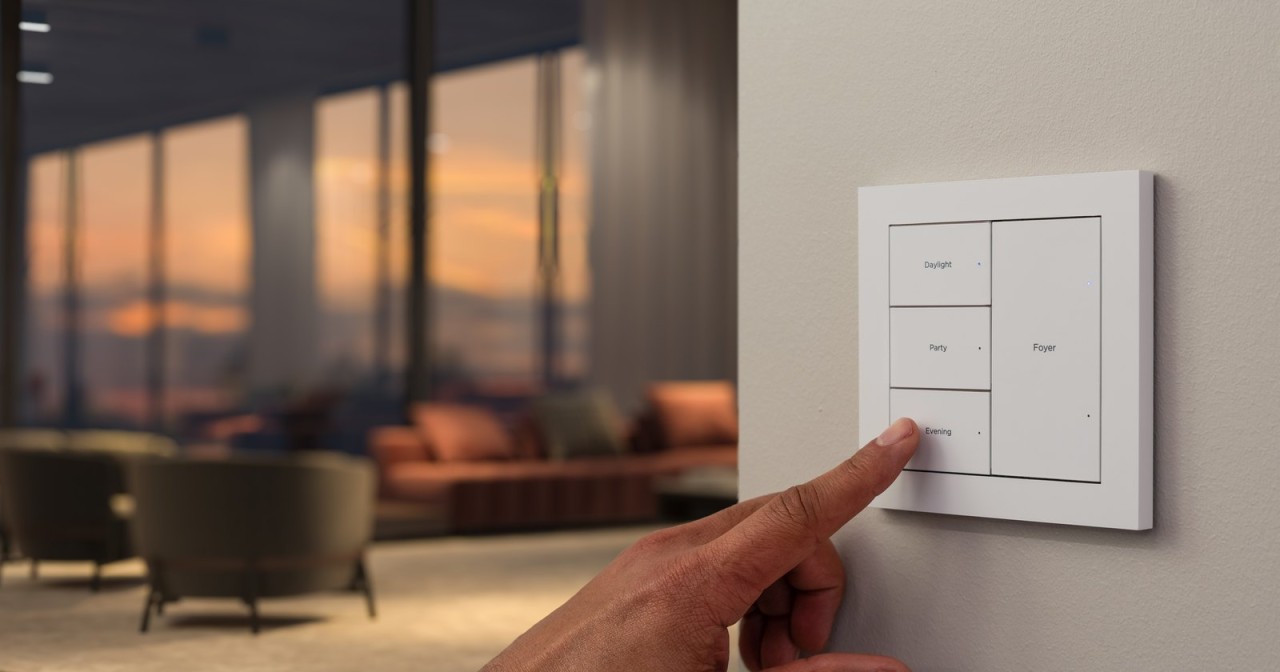
A finger pressing the Evening button on a white Control4 Lux keypad with buttons labelled Daylight, Party, Evening and Foyer, mounted on a light wall beside a softly lit lounge with tall windows at dusk

If your Control4 app looks nothing like it did two years ago, that's X4. Control4 rebuilt the whole interface, and it has kept adding to it all year. There's also a new doorbell, a new in-wall touchscreen and more lighting hardware.

Some of it is worth doing this winter. Some of it can wait. And a few older parts are reaching the end of the road, which you want to know before an update and not after. Here's what changed, in plain terms, from Control4's own release notes and spec sheets.

X4 is the new app, and not every system can run it

X4 is Control4's name for OS 4. The full release came out in April 2025, and it changed how you get around your house on the phone, the tablet and the touchscreens.

The big piece is the new Home Screen. Little status chips across the top show what's on, what's open and what's playing. You can pin a favourite to the Home Screen or to a single room. Widgets put more control on the first screen, so fewer taps. A mini player at the bottom runs every active music session, and you can start a song in several rooms at once without walking into each room in the app first.

Then there are Routines. These are ready-made automations you pick from a gallery, and the gallery only shows the ones that fit the gear in your house. A timeline shows what's coming up, with a button to run one now or skip it once. Handy the morning you're home sick and don't want the shades flying open at 7. Control4's fall 2026 update added scheduling for motorized shades and for music playlists through the day.
Continue reading
Tags:

Hi-Fi Stereo in Your Ottawa Living Room: Getting Speakers to Sound Right

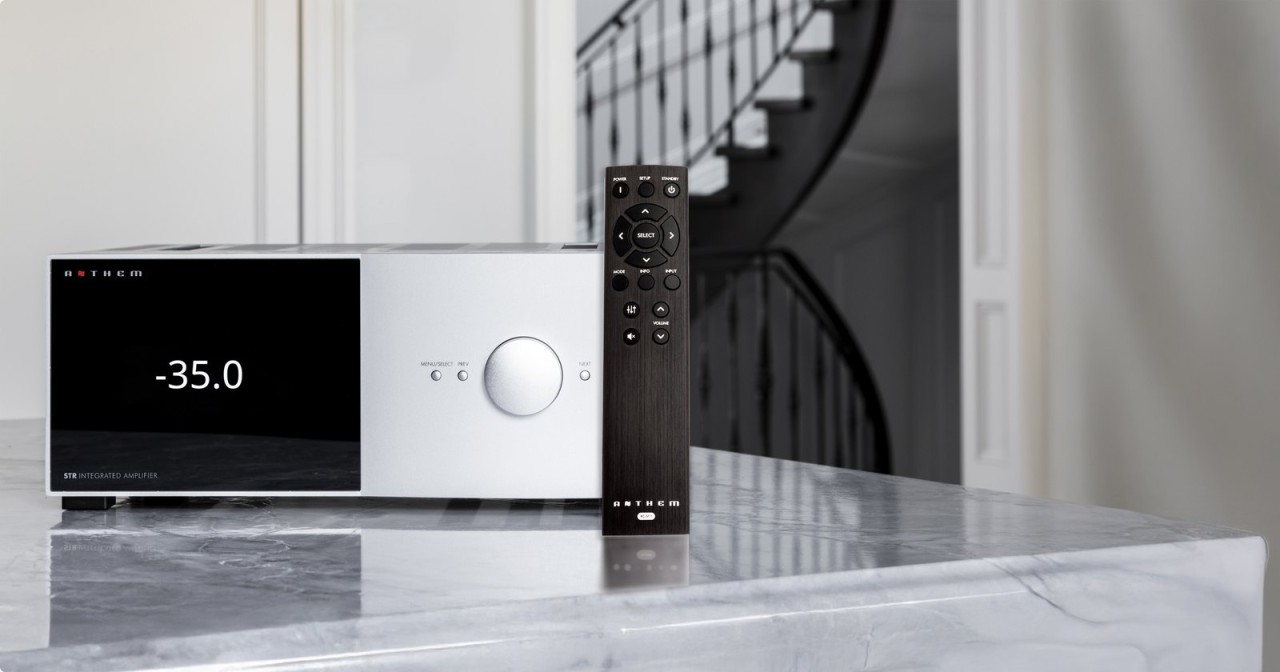
Silver Anthem STR Integrated Amplifier with its volume display reading -35.0, next to its black remote on a white and grey marble counter, with a curved black staircase railing out of focus behind it

Most people who come in asking about new speakers already own decent ones. The trouble is where they ended up. One is jammed in a corner beside the fireplace, the other sits on a low shelf behind a plant, and the couch is wherever the couch fits. Then the bass booms on some songs and disappears on others, and the singer seems to come from the left side of the room.

Before you spend more money, it helps to know how much of good stereo sound comes from setup. Below is how we approach a two-channel system in an Ottawa living room, using the guidance Paradigm and Anthem publish for their own gear. Both companies are Canadian, and we sell and install both.

Start with the room you have

Every room changes how speakers sound. Paradigm says so plainly in its Monitor SE owner's manual, and the points it makes line up with what we hear in Ottawa homes.

  • Soft stuff matters. Curtains, rugs, a fabric sofa and wall hangings soak up the mids and highs. Too much and the sound goes dull. A bare room with hardwood and big windows sounds bright. A normally furnished living room usually lands in the right spot.
  • Concrete makes bass harder. Paradigm notes that concrete floors and walls make low-frequency standing waves worse. That's worth knowing if your music room is a basement rec room on a slab.
  • Square-ish rooms are tricky. If the height, width and length are close to each other, Paradigm warns about strong bass problems. You can still make it work. You just have to try more speaker positions.

If the room is very lively, acoustic treatment helps before any electronics do. We covered that in our post on acoustic panels.

Where the speakers go

This is the part that costs nothing and makes the biggest difference. Paradigm's placement rules for its floorstanding and bookshelf speakers are simple.

Continue reading

Blackout Shades for an Ottawa Home Theater: How to Stop the Light Leaks

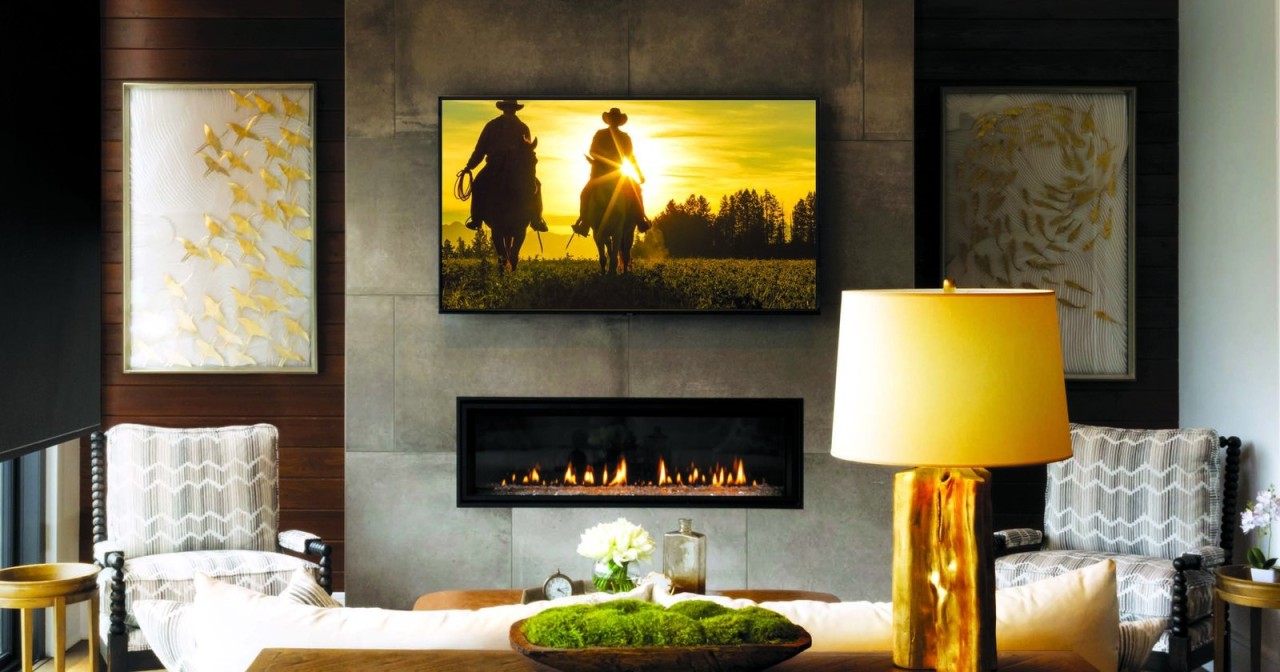
Living room set up for movie night, with a wall-mounted TV showing two riders at sunset above a linear gas fireplace in a grey stone tile wall, dark wood panelling and framed art on both sides, and a white sofa behind a wood console table with a gold lamp

A lot of the people who call us about a theater room already bought blackout shades. Then they fire up the projector on a Saturday afternoon and see a bright stripe down both sides of every window. The fabric is doing its job. The light is just going around it.

Blackout is a system, not a fabric. Below is what actually stops the light, based on Lutron's own installation guidance, plus the things that have to be decided before the drywall goes up.

Why a theater room needs real dark

A TV fights glare. A projector fights everything. The picture on a projection screen is light bouncing off a surface, so any daylight that lands on that screen turns the blacks grey. Dark scenes go muddy. A big TV copes better, but a bright window reflected in the screen still pulls your eye off the movie. If you're still deciding between the two, our projector vs TV post walks through it.

Ottawa adds its own twist. Around December 21 the noon sun only climbs about 21 degrees above the horizon here. In late June it gets up to about 68. That low winter sun comes straight through south and west windows and lands right where the TV hangs. So a room that looked fine when you moved in during July can be hard to watch on a January afternoon.

Where the light gets in

Picture a regular roller shade pulled all the way down. Light still has four ways in:

Continue reading

Ketra Lighting in Ottawa: What It Is and How to Plan It Into Your Home

Four people talking around a marble-topped island with dark wood stools, lit by warm cove light washing a plaster wall and small recessed downlights in the ceiling

Most people who ask us about Ketra have already seen it somewhere. A kitchen where the white light looked like late afternoon sun. A painting that looked better at night than it did at noon. Then the questions start. What is it? Why does it cost more than a pot light? Will it work in my house?

Here are the answers, with specs from Lutron's own documents. If you're after light that follows the sun through the day, our circadian lighting post covers that side. This one is about the hardware and the planning.

What Ketra actually is

Ketra is a line of lights made by Lutron. It isn't a switch or a hub. It's downlights, lamps and linear fixtures, and every light source has its own wireless control built in.

A regular LED pot light uses white LEDs. Buy 3000K and you get 3000K, forever. Ketra mixes light from several coloured LEDs and white ones inside a single module. That mix is how one fixture can go from 1,400K, about the colour of a candle, all the way to 10,000K. It can also do pastels and full colour.

Because each light has its own radio, control isn't tied to the wiring. Lutron points out that the lights can be rezoned later without rewiring. Move the dining table two feet and the lights over it can become their own zone. That's a programming change, not a call to the electrician.

Continue reading

Categories