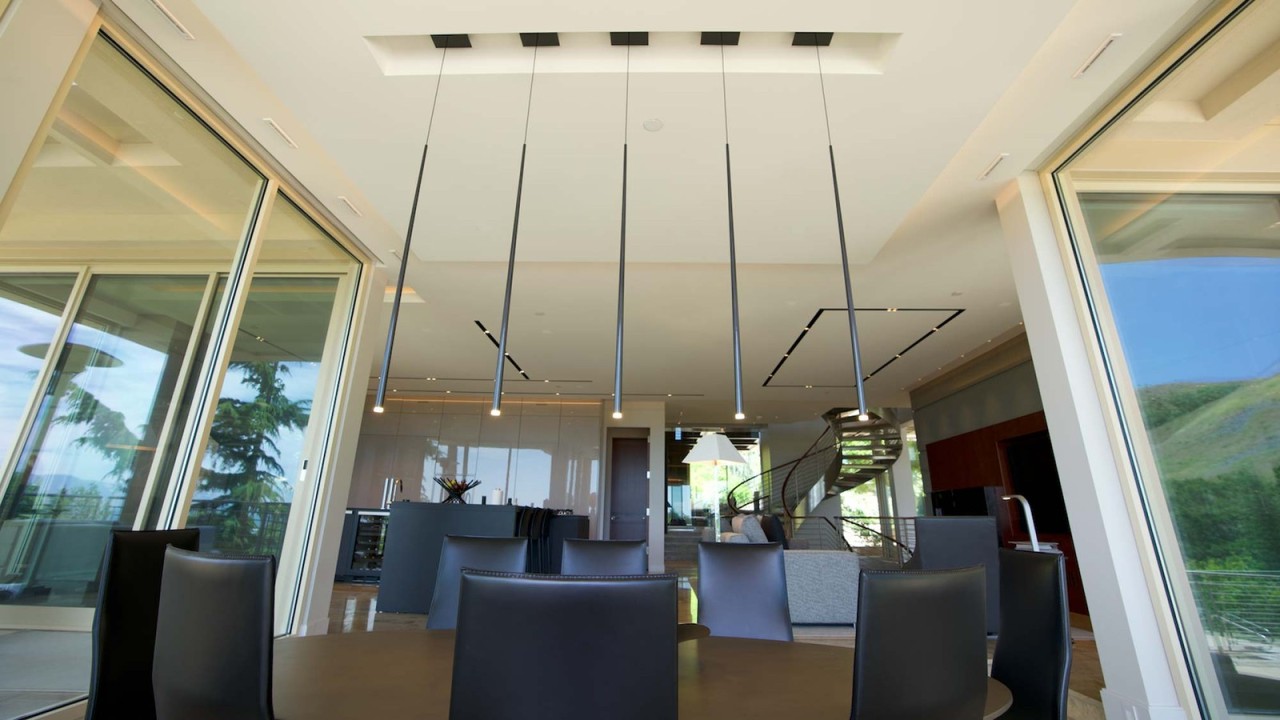
Interior designers are often asked to deliver a calm, uncluttered space and a home full of technology at the same time. The two goals do not have to conflict. When technology is planned early, it supports the design. When it is left until the end, it usually shows up as extra keypads, visible speakers, awkward TV placement and a router sitting on a shelf. These tips help keep the design intact.
Bring the integrator in before drawings are final
Low-voltage wiring, equipment locations, speaker positions and shade pockets are easiest to accommodate before walls are framed and ceilings are closed. A short coordination meeting during design development can prevent conflicts between lighting layouts, millwork, HVAC grilles and speakers. For new builds and major renovations, early pre-wiring is usually less disruptive than retrofitting later. Our new construction process is built around that timing.
Design lighting in layers and scenes
Ambient, task and accent lighting work best when they can be adjusted together. Instead of placing a bank of switches by every entrance, consider scene keypads with clear, engraved labels such as "Dinner," "Relax" or "Goodnight." This reduces wall clutter and lets the lighting design be experienced the way you intended. Learn more about Lutron lighting control.
Treat shades as part of the window design
Motorized shades affect sightlines, privacy and glare on screens; depending on the fabric chosen, they can also reduce sun exposure on furnishings. Decide on fabric openness, colour, pockets and mounting early, so hardware can be concealed and windows look consistent from inside and out. Shades can also be included in lighting scenes. See our approach to Lutron motorized shading.
Hide what should be heard, not seen
Architectural and in-ceiling speakers can deliver background music without dominating a room, but placement matters for sound quality as well as appearance. Agree on grille finishes, painting and alignment with lighting before installation. For media rooms, plan screen size, seating distance and equipment storage together.
