How Motorized Shades, Lighting, and Glass Work Together in a Modern Home

How Motorized Shades, Lighting, and Glass Work Together in a Modern Home
Some homes feel calm, balanced, and comfortable the moment you walk in. Others feel harsh, glary, or strangely uncomfortable even when the finishes are expensive. The difference is rarely furniture or decor.
It is light.
More specifically, it is how natural light, motorized shades, and artificial lighting work together.
At Aura Design, we see this every day. The most successful modern homes are not the ones with the most technology, but the ones where shading and lighting were designed together from the very beginning.
This guide explains how glass, motorized shades, and lighting systems interact, and why treating them as one system is what makes a home feel truly high-end.
WHY LIGHT FEELS WRONG IN MANY MODERN HOMES
Modern architecture uses more glass than ever. Large windows, floor-to-ceiling glazing, black frames, and open spaces are now standard. While visually stunning, glass introduces challenges that cannot be solved with lighting alone.
Uncontrolled daylight causes glare, heat buildup, fading of finishes, and visual discomfort. Homeowners often respond by closing blinds manually or turning on lights during the day, which feels counterintuitive.
Lighting is often blamed, but the real issue is lack of daylight control.
Motorized shades are not about blocking light. They are about shaping it.
GLASS IS THE STARTING POINT OF EVERY LIGHTING STRATEGY
The orientation, size, and type of glass determine how a space behaves throughout the day.
East-facing glass introduces strong morning light.
South-facing glass brings long hours of daylight and heat.
West-facing glass creates harsh glare in the afternoon and evening.
North-facing glass provides soft, consistent light.
Without shades, lighting designers are forced to compensate for problems that should have been solved earlier. When shades are planned correctly, lighting can be softer, warmer, and more natural.
WHY MOTORIZED SHADES ARE PART OF THE LIGHTING SYSTEM
Motorized shades are often treated as window coverings. In reality, they are part of the lighting system.
When integrated properly, shades automatically adjust based on time of day, sun position, or lighting scenes. They reduce glare before artificial lighting increases. They protect finishes and artwork. They maintain views while improving comfort.
In a well-designed home, shades move quietly in the background. You rarely notice them, but you feel the difference.
This is why luxury homes use motorized shades instead of manual blinds.
HOW LIGHTING CONTROL COMPLETES THE EXPERIENCE
Once daylight is controlled, artificial lighting can do its job properly.
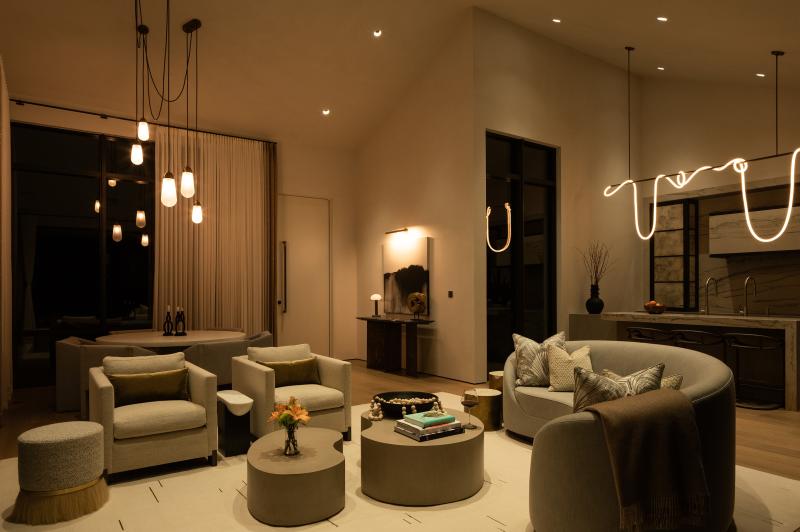
Lighting control allows brightness and color temperature to change throughout the day. Mornings feel fresh and energizing. Evenings feel warm and relaxing. Task lighting appears where it is needed without overwhelming the space.
When lighting and shades work together, the home always feels balanced. You are never fighting the sun or compensating for it.
This is the difference between a house that looks good in photos and a home that feels good to live in.
WHY DESIGNING THESE SYSTEMS SEPARATELY FAILS
One of the most common mistakes we see is designing lighting, shading, and glass independently.
The architect designs the windows.
The electrician installs lighting.
The homeowner adds shades later.
The result is a home where systems conflict instead of complementing each other.
Shades block fixtures. Lighting causes reflections. Keypads feel random. Automation feels forced instead of natural.
When Aura Design is involved early, these systems are designed as one. Shade pockets are sized correctly. Lighting zones align with window placement. Control feels intuitive.
AUTOMATED SCENES ARE WHERE EVERYTHING COMES TOGETHER
The real magic happens with scenes.
A Morning scene gently raises shades, increases natural light, and balances artificial lighting.
A Daytime scene controls glare while preserving views.
An Evening scene lowers shades and warms the lighting.
A Movie scene closes shades completely and dims lights smoothly.
An Away scene protects privacy and reduces heat load automatically.
These scenes remove decision-making from daily life. The home responds instead of requiring constant adjustment.
WHY THIS IS WHAT MAKES A HOME FEEL EXPENSIVE
Luxury is not about how much technology you see. It is about how little you notice it.
Homes that feel expensive are not brighter. They are calmer. Light is controlled, not overpowering. Glare is eliminated without darkness. Spaces feel intentional.
This is only possible when motorized shades, lighting control, and glass design are planned together.
THE MOST COMMON MISTAKE HOMEOWNERS MAKE
They plan shades too late.
Motorized shades require pocket depth, power planning, trim coordination, and control integration. When planned after drywall, compromises are unavoidable. When planned early, everything disappears cleanly into the architecture.
The best shading systems are the ones you barely see.
WHY WORK WITH A DESIGN-FOCUSED INTEGRATOR
Aura Design specializes in designing integrated lighting and shading systems for modern homes in Ottawa. We work closely with builders, architects, and interior designers to ensure technology supports the architecture, not competes with it.
We do not sell products in isolation. We design systems that work together.
That is why our projects feel balanced, refined, and timeless.
FINAL THOUGHT
If a home feels uncomfortable despite beautiful finishes, the problem is usually light.
When glass, motorized shades, and lighting are designed together, the home feels effortless. Calm. Natural. Complete.
That is not accidental. It is intentional design.