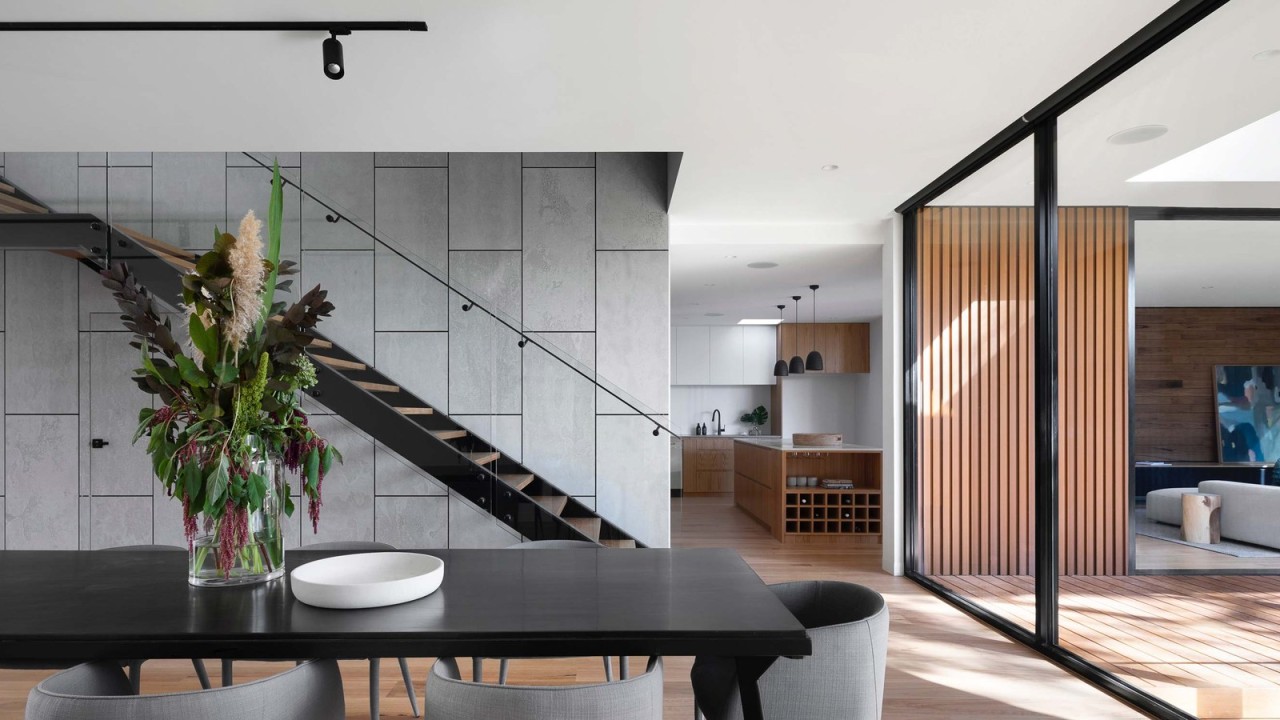
A dream home is not defined by the amount of technology inside it. It's defined by how easily that technology fits into everyday life. Well-integrated homes often share a few qualities: they are planned early, they are simple to use, and they are supported after move-in. Here is what goes into a home that feels effortless.
A clear plan before the walls close
Integration starts on paper. Equipment locations, speaker and display positions, keypad placement, shade pockets and wireless access point locations should be coordinated with the architect, designer, builder and electrician during design. Pre-wiring during framing causes less disruption than opening finished walls later. Our new construction process is built around this stage.
Lighting and shades that set the tone
Lighting strongly shapes how a home feels. Scene-based control replaces rows of switches with a few clearly labelled buttons for cooking, entertaining, relaxing and going to bed. Motorized shades help manage privacy, glare and daylight and can follow the same scenes. Learn more about Lutron lighting control.
Entertainment where you want it
Whole-home audio lets music follow you from the kitchen to the patio, while a dedicated media room or living-room theatre provides a focal point for movies and sport. Displays, speakers and equipment can be concealed or integrated into the design, so the technology does not dominate the room.
One simple way to control it all
A home automation platform such as Control4 can bring lighting, shades, climate, entertainment and compatible security devices into one interface, controlled from keypads, touchscreens, remotes or a phone. The goal is not to expose every feature, but to make the daily routines of the household simple and consistent.